
The Rest Reset
Day 2: Creative Rest - Play
Today, we’ll practice creative rest, the gentle act of tending to the part of you that imagines, makes, and dreams. In daily life, creativity is often tied to output and productivity. We brainstorm to solve problems, plan to meet deadlines, and make things that serve a purpose. Even when our calendars lighten, we can feel the need to still be productive.
Creative rest asks us to soften this pressure. In its passive form, it might look like visiting a gallery, listening to music, or watching clouds move across the sky. In its active form, it can be making art with no agenda, rearranging objects on your desk until they feel just right, or exploring play in any form. Either way, creative rest offers space to move beyond the shoulds that keep us stuck and into the curiosity that invites inspiration to return. When we release expectations and follow what feels light, we remind the nervous system that play is not frivolous. It is restorative.
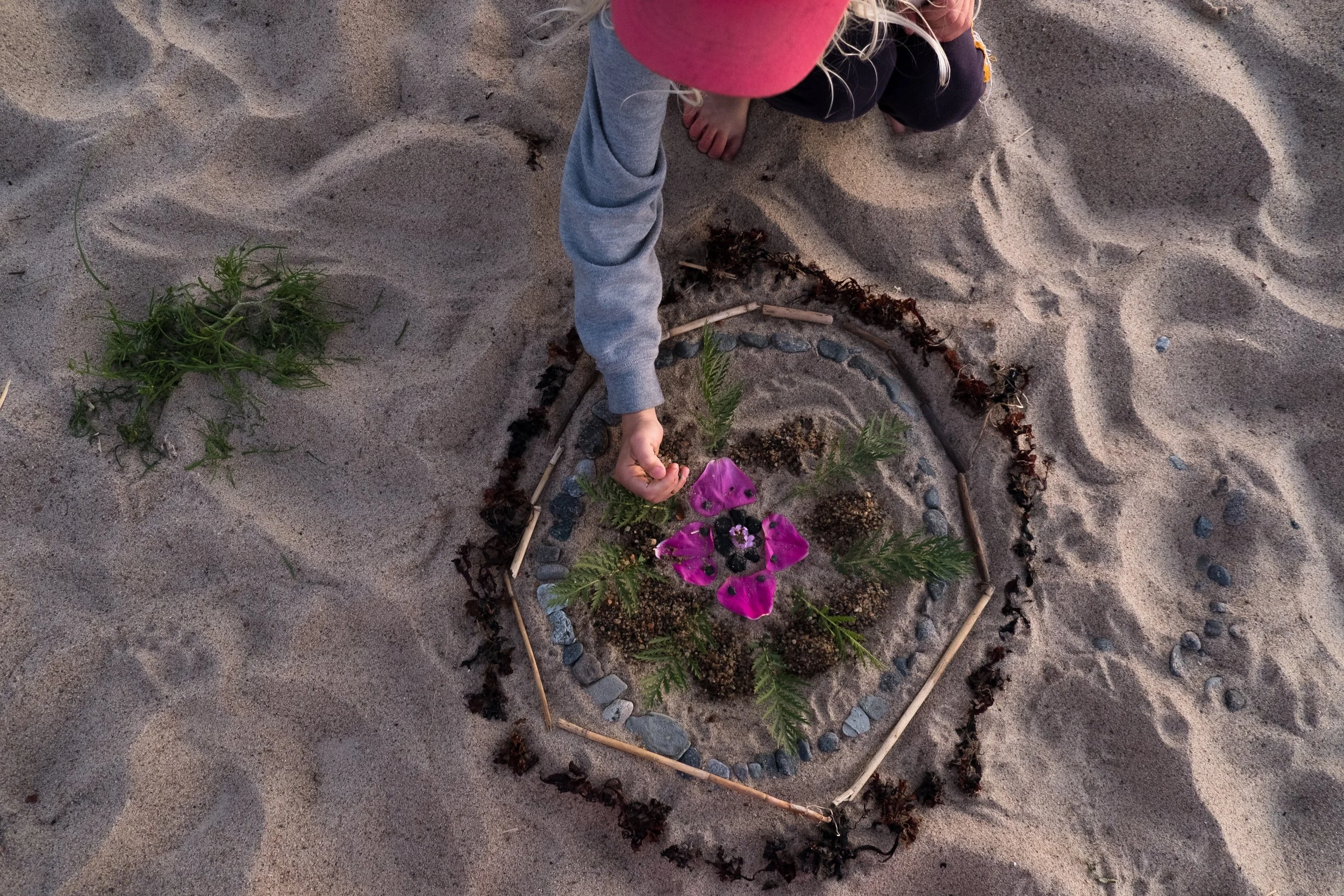
You’ll create using the natural objects you gathered on your sensory rest walk. Let go of the impulse to perfect or perform. Arrange, stack, balance, or pattern your pieces in whatever way feels interesting. Notice how your body responds when you make something with no outcome in mind. You may find that rest arrives not only in stillness, but in the freedom to explore without an agenda.
Your practices include creating a nature mandala and a brief journaling prompt to support reflection from a place of ease and curiosity.
May you feel how play rekindles wonder, letting go of perfect outcomes, and notice how rest finds you when creating becomes an act of joy rather than purpose.
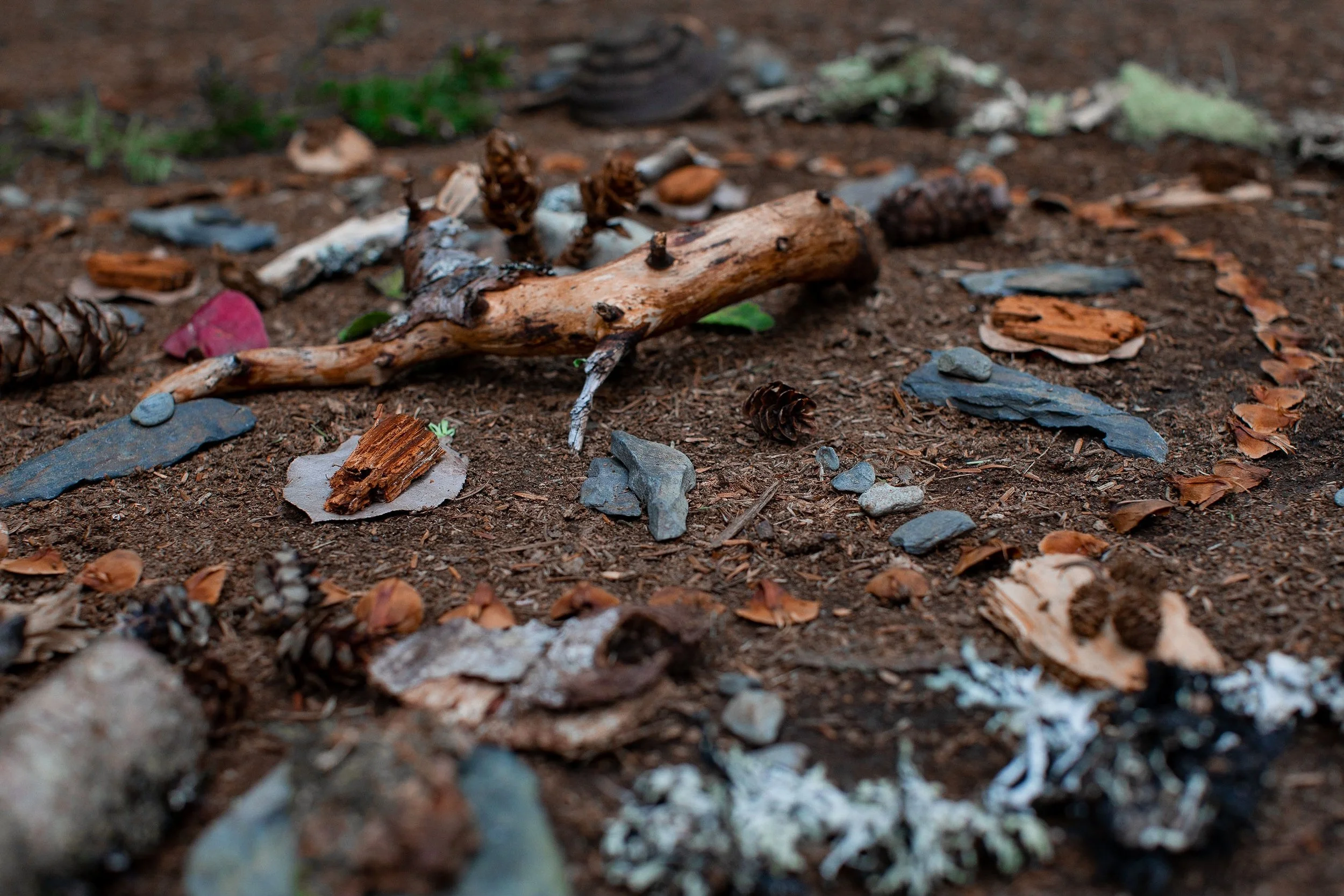
Main Practice: Nature Mandala
Set aside at least 20 minutes for this practice. Choose a space that feels grounded and open enough to spread out.
You might clear a spot on your kitchen table, sit on your living room floor, or step outside and find a flat rock, a patch of grass, or a small stretch of sidewalk. Whatever space you choose becomes your canvas.
Gather your natural objects from yesterday’s walk. If you didn’t gather materials yesterday, you can do so now. A quick walk around your home, yard, neighborhood, or local park can provide leaves, stones, feathers, pinecones, or other small treasures.
Lay everything out where you can see it. Notice shape, size, color, and texture.
Take a breath, soften your shoulders, and give yourself permission to create without expectation.
Begin your mandala with a single object as an anchor. Let it mark your starting point.
Arrange objects in repeating patterns or loose spirals. Create lines, arcs, clusters, or circles. Follow what feels steady and intuitive rather than trying to make something impressive.
This is rest, not performance.
If your mind wanders toward productivity or judgment, come back to touch and breath. Notice how your hands know what to do when your thoughts soften.
There is no right or wrong. Focus on sensation, rhythm, and curiosity.
When your circle feels complete — not perfect, simply enough — sit with it.
Notice what arose in the making.
You may choose to take a photo as a memento.
Feel free to grab your journal and respond to today’s prompt while admiring your mandala.
Rest in the quiet beauty you’ve created, and allow creativity to refill you from the inside out.
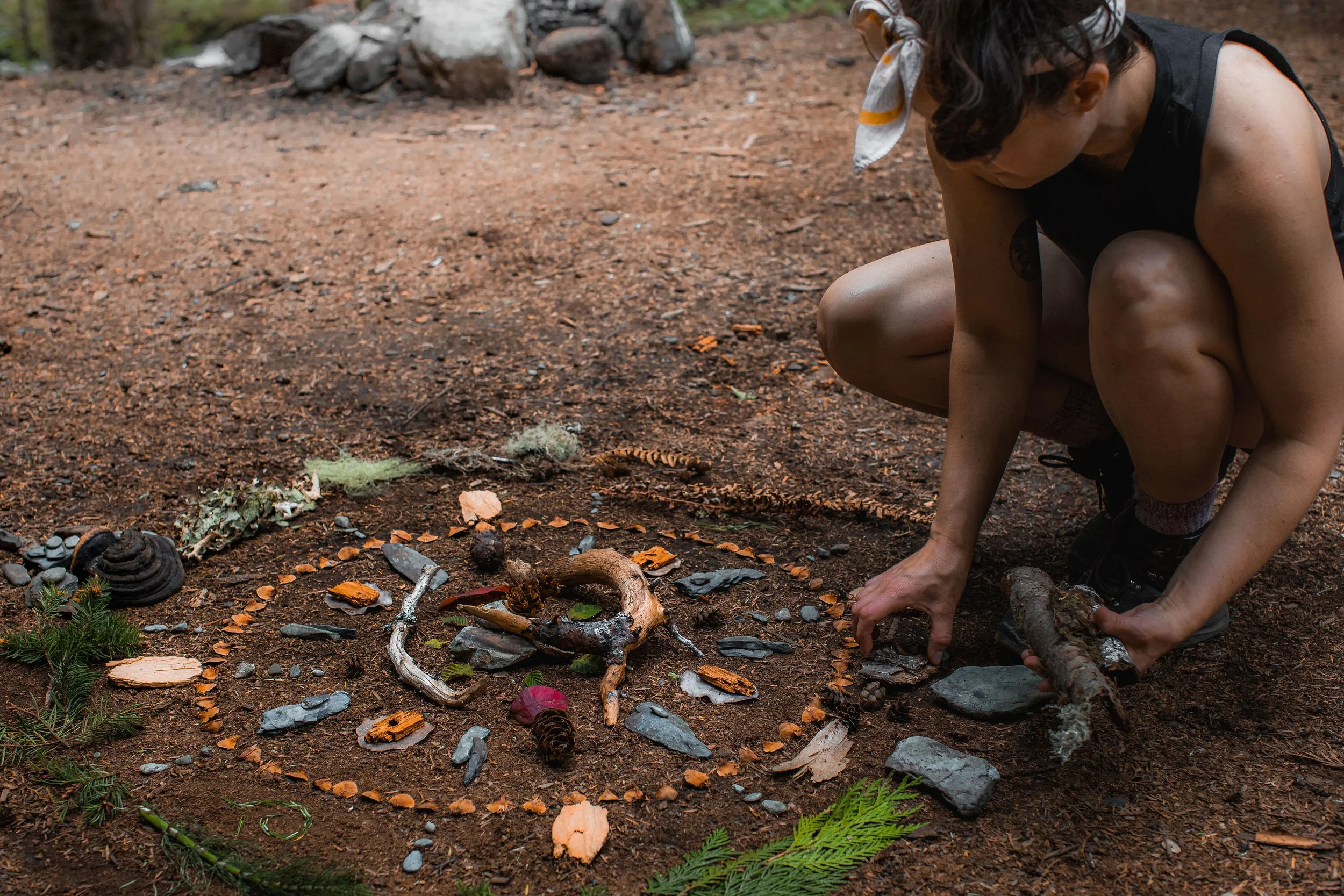
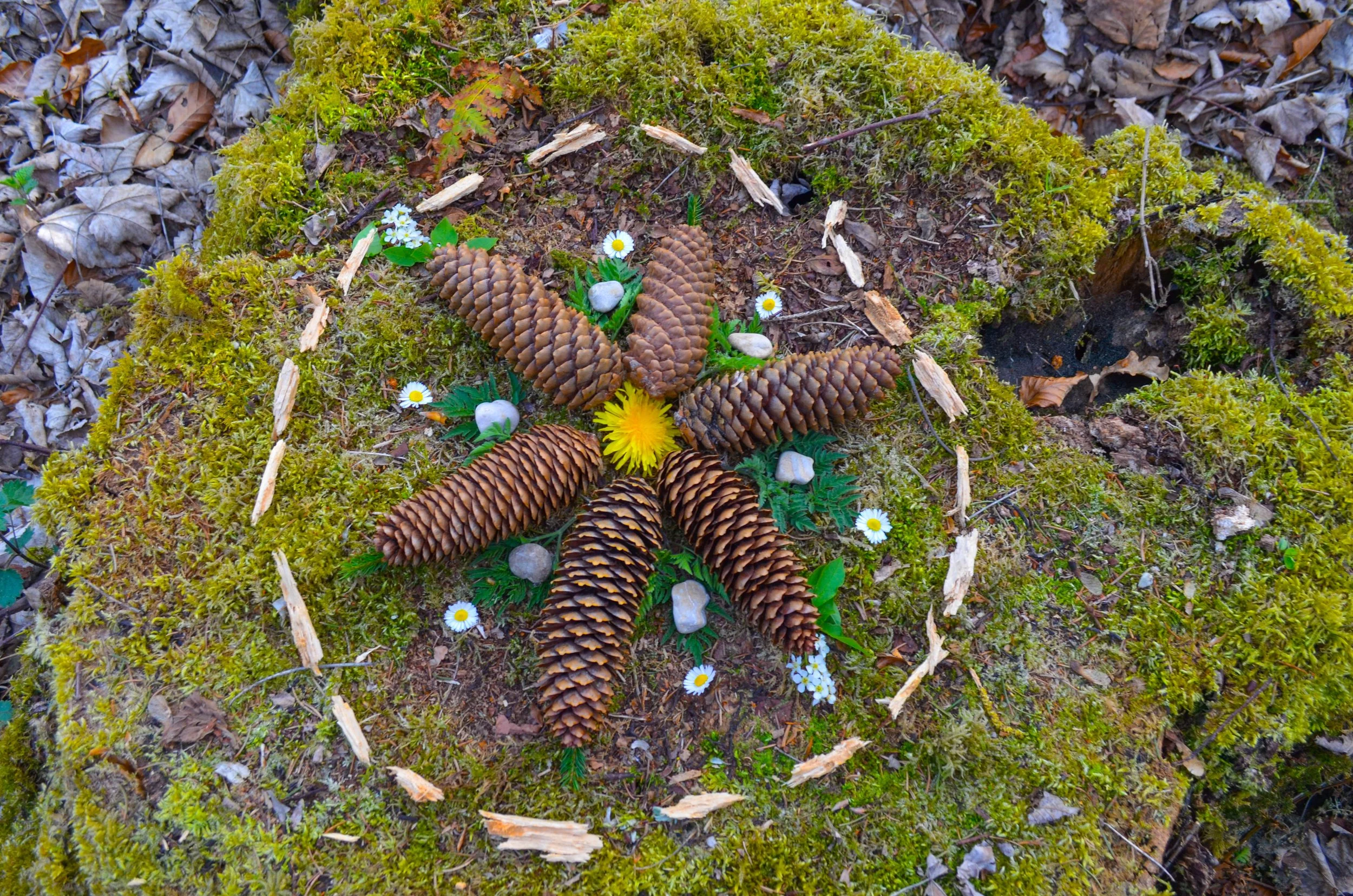
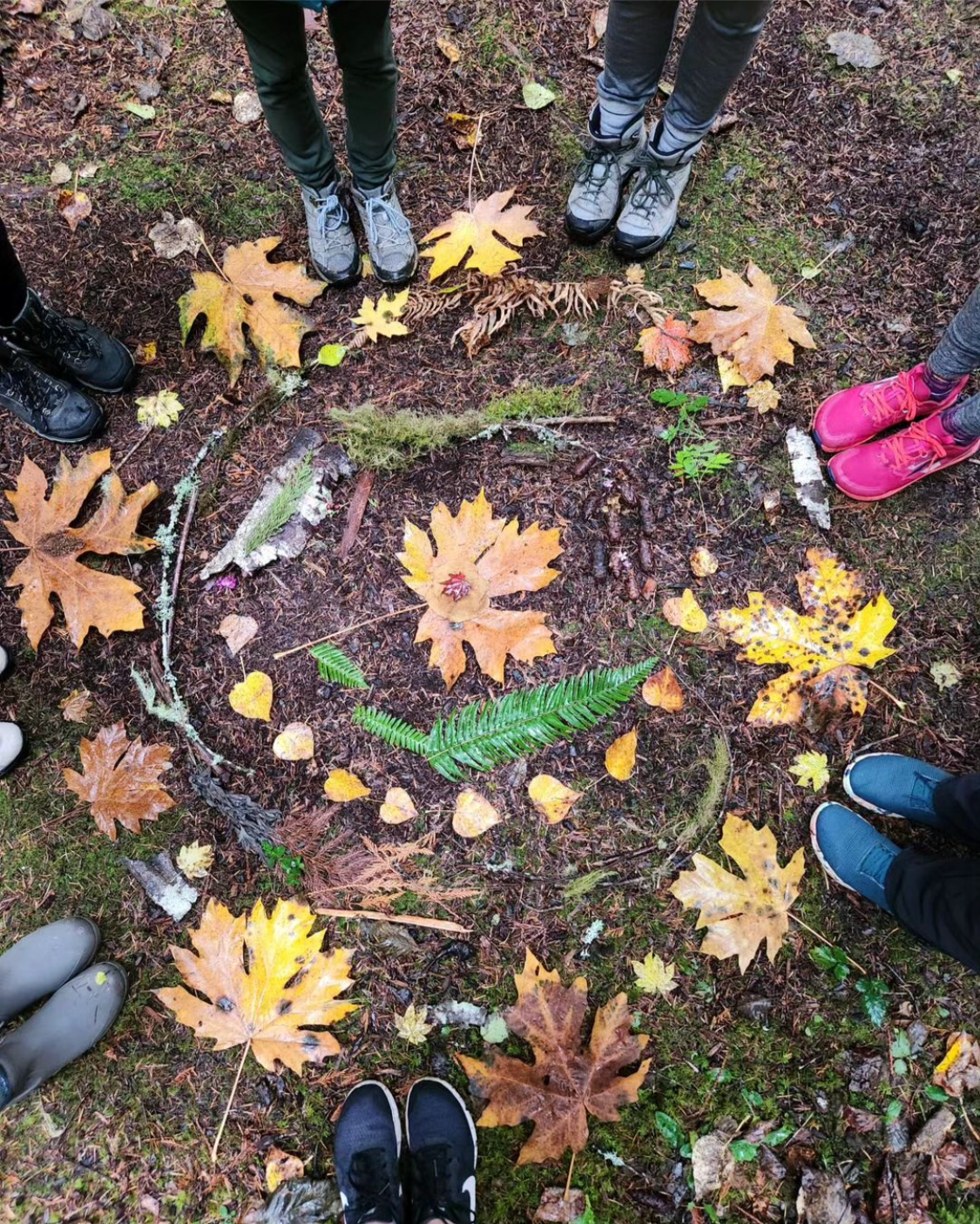
Mandalas are not meant to be permanent. When you feel your creation has served its purpose, return each piece with care — back to the earth, into a box, or wherever you feel it belongs. Take as much time in this gentle dismantling as you did in building your mandala. Notice how releasing it feels, and honor the process as part of the rest and play you cultivated during its creation.
Journaling Prompt:
Grab your journal and give yourself five to ten slow, intentional minutes to respond in whatever way feels true to you. Let the words arrive as they want to. No need to polish or explain. You can write in full sentences or half-thoughts, lists or questions, doodles or sketches, poems or single words. Follow what feels natural. This is your space to slow down, listen inward, and respond without expectation.
Take a moment to sit quietly with your mandala. Notice how your body feels after moving and arranging the objects. Let your breath settle and allow your eyes to wander over the shapes, colors, and textures you’ve brought together.
When you’re ready, you can respond to the following:
What sensations or emotions arose while creating your mandala?
Did any memories, ideas, or insights surface as your hands moved?
How does this space of unstructured play feel in contrast to the usual busyness of your day?
What surprised you about the process, or about yourself?
How might you carry a sense of this creative ease into the rest of your day or week?
Let your journal be a companion to the quiet, curious space you’ve made with your mandala.